
Pilanesberg National Park: Complete Visitor and Safari Guide
Pilanesberg National Park is one of South Africa’s most accessible Big Five safari destinations. Located in the North West Province, approximately three hours by road from Johannesburg, this malaria-free game reserve offers opportunities to see elephants, lions, rhinos, buffalo and leopards in their natural habitat.
Set among the ancient volcanic hills of the Pilanesberg Ring Complex, the park combines varied landscapes, abundant wildlife, scenic viewpoints and an extensive network of game-viewing roads. Visitors can explore independently on a self-drive safari, join a guided game drive or spend several days experiencing the reserve from a safari lodge.
Whether you are planning your first African safari, a family wildlife holiday or a short escape from Johannesburg, this guide explains what to expect when visiting Pilanesberg National Park, including wildlife, entrance gates, safari activities, accommodation, seasons, travel arrangements and the park’s fascinating history.
Pilanesberg National Park at a Glance
Feature | Visitor information |
Location | North West Province, South Africa |
Distance from Johannesburg | Approximately 180–220 km, depending on departure point and route |
Driving time | Approximately 2.5–3.5 hours |
Park size | Approximately 50,000–55,000 hectares, depending on the area included in published figures |
Wildlife | Big Five, giraffes, zebras, antelope, hippos, hyenas and other species |
Birdlife | More than 300 recorded bird species |
Malaria risk | Malaria-free safari destination |
Safari options | Self-drive safaris, guided game drives and selected specialist activities |
Accommodation | Safari lodges, hotels, chalets, guesthouses and camping options |
Best wildlife-viewing conditions | Generally the cooler, drier winter months |
Nearest major resort | Sun City |
Main access | Road transfers, organised tours and self-drive |
Pilanesberg is particularly well suited to travellers who want to experience South African wildlife without travelling to more remote safari regions.
Its location makes both day tours and overnight safaris practical, while the malaria-free environment is an important consideration for families and international visitors.

Where Is Pilanesberg National Park?
Pilanesberg National Park lies in South Africa’s North West Province, northwest of Johannesburg and west of Pretoria.
The reserve is situated near Rustenburg and immediately north of the Sun City resort complex. Its location places it within reach of Gauteng’s major urban centres, airports and accommodation establishments.
The park occupies a distinctive circular landscape formed by ancient geological activity. Unlike many South African wildlife reserves characterised by relatively flat bushveld, Pilanesberg contains rugged hills, wooded valleys, open grasslands and waterholes.
These varied habitats support a wide range of animals and create different game-viewing opportunities throughout the park.
How Far Is Pilanesberg from Johannesburg?
Pilanesberg National Park is approximately 180–220 kilometres from Johannesburg, depending on your starting location and the entrance gate you use.
Most journeys take between 2.5 and 3.5 hours under normal driving conditions, although traffic and roadworks can affect travel times.
Travellers departing from OR Tambo International Airport should allow additional time when planning their journey, particularly during busy travel periods.
Because Pilanesberg is relatively close to Johannesburg, it is possible to visit on a full-day safari.
However, an overnight stay allows more time for game drives and a more relaxed wildlife experience.
Pilanesberg and Sun City
Sun City is situated alongside the southern section of Pilanesberg National Park.
The proximity of these destinations makes it possible to combine wildlife viewing with resort accommodation and other leisure activities.
Visitors staying at Sun City can arrange guided game drives into Pilanesberg, while travellers staying at safari lodges can visit nearby attractions when their itinerary allows.
Although the two destinations are closely connected geographically, Pilanesberg National Park is a protected wildlife area, while Sun City is a separate resort complex.
Wildlife in Pilanesberg National Park
Pilanesberg National Park supports a diverse wildlife population, including Africa’s Big Five and numerous other mammals, reptiles and birds.
The reserve’s location between the drier Kalahari region and the wetter Lowveld creates a transition between different vegetation types.
This combination of habitats supports wildlife associated with both relatively dry and more wooded bushveld environments.
Game viewing varies according to the season, weather, time of day, and movement of animals through the reserve.
Wildlife sightings are never guaranteed, but the park offers rewarding opportunities for patient visitors.

The Big Five in Pilanesberg
Pilanesberg is home to all five members of Africa’s Big Five:
African elephant
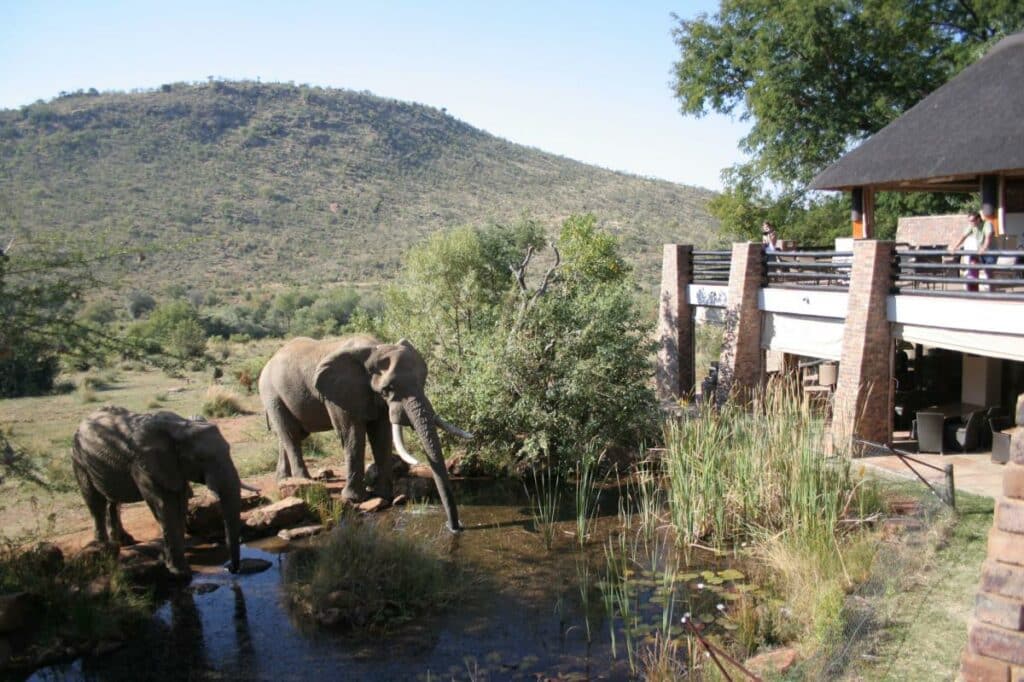
Elephants are among the most recognisable animals in the reserve. Visitors may encounter breeding herds, young elephants, and solitary adult bulls moving through woodland, grassland and waterhole areas.
Elephants are particularly interesting to observe because of their complex social behaviour and strong family relationships.
African lion
Lions are among Pilanesberg’s principal predators.
They may be seen resting in shaded areas, moving along roads, or hunting in suitable habitats. Early mornings and late afternoons can provide useful opportunities to observe lion activity.
African leopard
Leopards are solitary and generally more difficult to find than some other large mammals.
They favour areas offering cover, including rocky terrain and wooded valleys. Their secretive behaviour makes leopard sightings particularly memorable.
African buffalo
African buffalo are powerful herd animals that may be encountered in grasslands, woodlands, and areas close to water.
Large groups can create impressive wildlife-viewing opportunities, especially when moving together through open terrain.
Rhinoceros
Pilanesberg supports rhinoceros populations, including white and black rhinos.
White rhinos are generally associated with grazing habitats, while black rhinos are more often found in areas with suitable browsing vegetation.
Rhino conservation remains an important priority in South Africa. Visitors should avoid sharing precise, real-time rhino locations on public platforms.
Other Animals in Pilanesberg
Beyond the Big Five, Pilanesberg supports numerous other species.
Commonly sought-after animals include:
- Giraffes
- Plains zebras
- Blue wildebeest
- Impalas
- Kudus
- Waterbucks
- Warthogs
- Hippopotamuses
- Spotted hyenas
- Brown hyenas
- Black-backed jackals
- Baboons and vervet monkeys
The reserve also supports predators such as cheetahs and African wild dogs, although their presence and visibility can vary over time.
Smaller mammals, reptiles and insects contribute to the wider ecosystem and are an important part of the safari experience.
Visitors who take time to observe animal behaviour, tracks and interactions often discover that a rewarding game drive involves much more than searching for the Big Five.
For additional species information, explore our Pilanesberg wildlife guide and fauna and flora guide.
Birdwatching in Pilanesberg
Pilanesberg National Park is also a worthwhile destination for birdwatching.
More than 300 bird species have been recorded in the area, supported by its varied vegetation, wetlands, dams, and rocky habitats.
Birdwatchers may encounter:
- African fish eagles
- Southern yellow-billed hornbills
- Lilac-breasted rollers
- Kingfishers
- Herons
- Egrets
- Bee-eaters
- Raptors
- Waterbirds
Birdwatching is possible throughout the year.
Summer brings migratory species and increased breeding activity, while winter’s more open vegetation can make some resident birds easier to observe.
Waterholes and designated bird hides provide opportunities to spend time watching birds without constantly moving between locations.

Why Pilanesberg Is a Malaria-Free Safari Destination
One of Pilanesberg National Park’s most important advantages is its location outside South Africa’s recognised malaria-risk areas.
This makes Pilanesberg a popular choice for travellers who want a Big Five safari without visiting a malaria-endemic region.
The malaria-free setting is particularly relevant to:
- Families travelling with children
- First-time safari visitors
- Travellers planning short wildlife holidays
- International tourists combining Johannesburg with a safari
- Visitors who prefer a destination outside recognised malaria-risk zones
Malaria-free does not mean mosquito-free. Visitors may still encounter mosquitoes and other insects, particularly during warmer and wetter months.
Normal insect-bite precautions remain sensible, and travellers with specific medical concerns should consult a qualified healthcare professional.
Pilanesberg’s malaria-free status, combined with its proximity to Johannesburg, makes it a practical option for visitors with limited travel time.

Best Time to Visit Pilanesberg National Park
Pilanesberg National Park can be visited throughout the year.
However, seasonal changes influence vegetation, wildlife visibility, birdlife, and the overall safari experience.
The best time to visit depends on whether your priority is seeing large mammals, photographing green landscapes, observing birds, or travelling during warmer weather.
Winter Safari Season: May to September
Winter is generally the dry season in Pilanesberg.
During these months, vegetation becomes thinner, grass is shorter, and some animals gather more frequently around reliable water sources.
These conditions can make wildlife easier to spot.
Winter advantages include:
- Improved visibility through thinner vegetation
- Cooler daytime temperatures
- Reduced grass cover
- Good opportunities to observe animals around water
- Generally lower rainfall
Early mornings and evenings can be cold, particularly when travelling in an open safari vehicle.
Visitors should bring warm jackets, layered clothing and protection against the wind.
Summer Safari Season: October to April
Summer brings warmer temperatures, seasonal rainfall, and greener vegetation.
The landscape changes considerably as grasses grow, trees produce new leaves, and seasonal water becomes more widely available.
Summer advantages include:
- Green landscapes and dramatic skies
- Increased bird activity
- Migratory bird species
- Opportunities to observe young animals
- Attractive conditions for landscape photography
Thicker vegetation can make certain animals more difficult to locate.
Afternoon thunderstorms may also affect game drives, although rain often brings welcome relief from the heat.
Pilanesberg Safari Seasons Compared
Season | Conditions | Main advantages |
May–August | Cool, generally dry | Thinner vegetation and wildlife visibility |
September–October | Warming temperatures and seasonal transition | Dry-season viewing with changing landscapes |
November–February | Warm to hot, generally wetter | Birdlife, green scenery and young animals |
March–April | Late summer to autumn | Moderate temperatures and varied wildlife experiences |
For visitors whose main priority is spotting large mammals, the dry winter months are often a good choice.
Travellers interested in birdwatching and green scenery may prefer summer.
No season guarantees particular sightings, and every visit offers different opportunities.
Safari Options in Pilanesberg National Park
Pilanesberg offers several ways to experience wildlife.
The two main options are self-drive safaris and guided game drives, with additional activities available through selected operators.
Your choice depends on your budget, available time, transport arrangements and preferred level of guidance.
Guided Game Drives
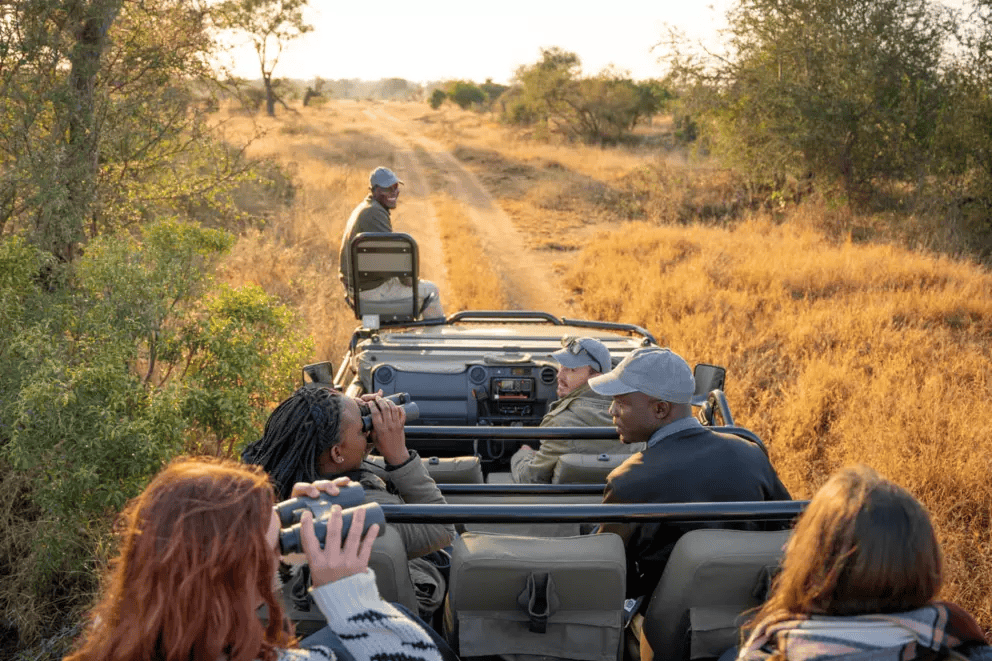
A guided game drive takes place in a safari vehicle accompanied by an experienced field guide.
Open safari vehicles provide elevated seating and unobstructed viewing opportunities, allowing guests to observe wildlife and the surrounding landscape.
Guides help visitors identify animals, understand behaviour, and interpret signs such as tracks, calls, and feeding activity.
A guided safari is particularly suitable for first-time visitors who want to learn about the environment rather than simply drive through the reserve.
Benefits of guided game drives include:
- Wildlife interpretation from an experienced guide
- Assistance identifying animals and birds
- Less concern about navigating park roads
- Opportunities to learn about conservation
- A structured safari experience
Morning and afternoon drives are popular because many animals are more active during cooler periods.
Self-Drive Safaris
Pilanesberg National Park is also a practical destination for independent travellers.
The reserve contains approximately 200 kilometres of established tarred and gravel game-viewing roads.
Many routes are suitable for ordinary passenger vehicles under normal conditions, although visitors should check current road conditions and restrictions.
Self-drive safaris allow you to choose your route, stop at sightings, and spend time exploring at your own pace.
However, self-drive visitors must remain on designated roads and follow all park regulations.
They should also remain inside their vehicles except at officially designated areas where exiting is permitted.
Guided Safari vs Self-Drive Safari
Feature | Guided game drive | Self-drive safari |
Wildlife guide | Included | Not included |
Vehicle | Safari vehicle | Your own or rented vehicle |
Route planning | Managed by guide | Managed independently |
Wildlife interpretation | Detailed | Based on personal knowledge |
Flexibility | Scheduled departure | Greater independence |
Best suited to | First-time visitors and guided experiences | Independent travellers |
Both options provide opportunities to experience the same broader wildlife environment.
For visitors unfamiliar with African wildlife, a guided game drive offers valuable educational benefits.

Pilanesberg Day Tours from Johannesburg
A Pilanesberg day tour is a practical way to experience a Big Five safari when staying in Johannesburg or Pretoria.
Organised day tours typically combine road transfers with a scheduled game drive inside the reserve.
Depending on the selected package, arrangements may include collection from a hotel or another agreed departure point.
A typical day safari may involve:
- Early morning departure from Johannesburg
- Road transfer to Pilanesberg National Park
- Arrival and park entry
- Guided wildlife-viewing experience
- Scheduled refreshment or meal break
- Return transfer to Johannesburg
Exact itineraries, inclusions and departure times vary by operator and package.
Because road travel occupies a significant part of the day, visitors should expect an early departure and a full-day excursion.
A day tour is well suited to travellers with limited time, but those wanting several game drives may benefit from an overnight safari.
Explore Pilanesberg safari tours to compare available experiences.

Pilanesberg National Park Entrance Gates
Pilanesberg has several entrance gates serving different parts of the reserve.
The most suitable entrance depends on your route, accommodation, and intended game-viewing area.
Commonly referenced entrance gates include:
Bakubung Gate
Situated on the southern side of the reserve, Bakubung Gate provides access to areas near Sun City and Bakubung Bush Lodge.
Kwa Maritane Gate
This southern entrance is associated with the Kwa Maritane area and nearby accommodation.
Manyane Gate
Located on the eastern side of the park, Manyane Gate is used by visitors approaching from the east and by guests staying in the Manyane area.
Bakgatla Gate
Situated towards the northern section of the reserve, Bakgatla Gate provides access from the Moruleng side of Pilanesberg.
Bosele Gate
Bosele is another recognised access point on the eastern side of the reserve. Its operating arrangements should be confirmed before travel.
Private lodge areas may have separate access arrangements and may not be open to general self-drive visitors.
Always confirm the correct entrance with your accommodation provider or safari operator.
Pilanesberg Gate Times
Pilanesberg National Park operates seasonal entrance and exit times.
Opening and closing arrangements may change according to the time of year, operational requirements, and park management decisions.
Visitors should verify current gate times before departure rather than relying on an outdated timetable.
Arriving early allows more time for game viewing, while planning your exit carefully helps avoid travelling close to closing time.
For detailed information, consult our Pilanesberg National Park gate times guide.
Pilanesberg Entrance Fees
Entrance fees may vary according to visitor category, age, vehicle type, and applicable park regulations.
Different charges or access arrangements may apply to day visitors, overnight guests and organised safari groups.
Because tariffs are subject to change, confirm the latest entrance fees directly with park management or your tour operator before travelling.
If you are booking an organised safari, check whether conservation and park entrance fees are included in the advertised package price.
This helps avoid unexpected costs on the day of travel.

Accommodation in Pilanesberg National Park
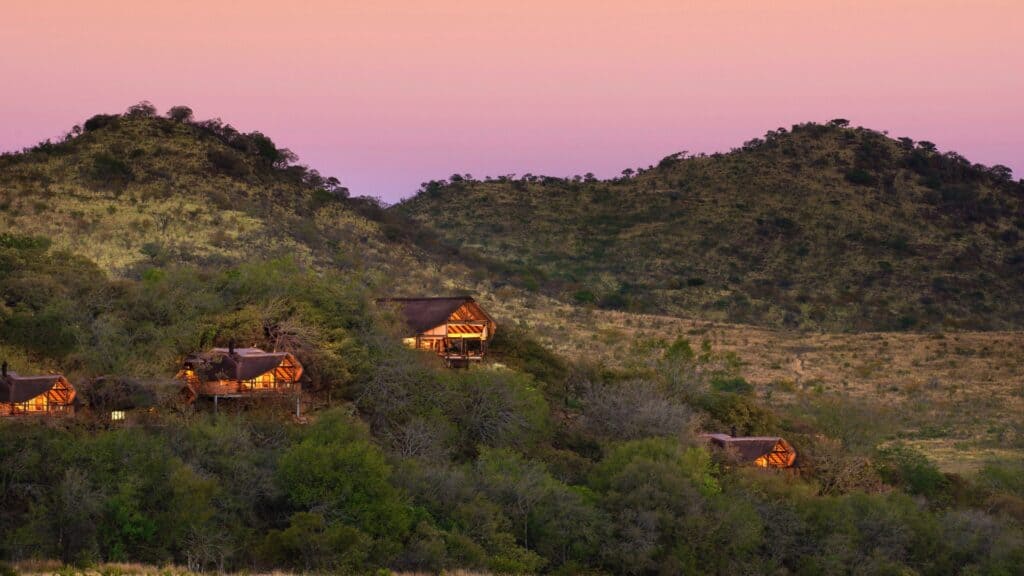
Pilanesberg offers accommodation options ranging from established safari lodges to more affordable resorts, chalets and camping facilities.
Accommodation is available in and around the reserve, including areas close to Sun City and the main entrance gates.
Your choice should reflect your preferred safari experience, budget and transport arrangements.
Safari Lodges
Safari lodges are popular with travellers who want accommodation combined with wildlife activities.
Depending on the property and package, a lodge stay may include meals, guided game drives, and access to additional facilities.
Well-known accommodation establishments associated with the Pilanesberg area include:
Bakubung Bush Lodge
Situated near the southern section of the reserve, Bakubung Bush Lodge offers a convenient base for visitors exploring Pilanesberg.
Kwa Maritane Bush Lodge
Kwa Maritane is known for its bushveld setting and access to wildlife-viewing experiences.
Ivory Tree Game Lodge
Located in the northern area of Pilanesberg, Ivory Tree provides lodge accommodation with guided safari activities.
Shepherd’s Tree Game Lodge
Shepherd’s Tree is an established safari lodge associated with the western and southern sections of the reserve.
Black Rhino Game Lodge
Situated within the Black Rhino Reserve area, this lodge offers accommodation in a quieter concession setting.
Accommodation facilities, game-drive arrangements, and package inclusions vary between properties.
Budget-Friendly Accommodation
Travellers seeking more affordable options can consider accommodation outside the main lodge category.
Depending on availability, options may include:
- Self-catering chalets
- Guesthouses
- Family accommodation
- Camping and caravan facilities
- Hotels near Sun City and Rustenburg
Staying outside the reserve can reduce accommodation costs, but visitors should consider travel time to the park gates.
When comparing properties, check whether game drives, meals, transfers, and park fees are included.
For further planning, see our Pilanesberg accommodation guide.
Things to Do in Pilanesberg National Park
Although game drives are the main attraction, Pilanesberg offers several other ways to appreciate its landscapes, wildlife, and natural environment.
Availability varies, and some activities require booking.
Visit Mankwe Dam
Mankwe Dam is one of the park’s best-known wildlife-viewing locations.
The dam attracts animals and birds that depend on water, creating opportunities to observe different species in one area.
Visitors may encounter elephants, antelope, hippos, and a variety of waterbirds, depending on conditions.
Waterhole sightings can be unpredictable, so spending time observing the area is often more rewarding than making a brief stop.
Explore Wildlife and Bird Hides
Designated hides provide opportunities to observe animals and birds from sheltered viewing positions.
They are particularly useful for photographers and birdwatchers who prefer to wait quietly for wildlife activity.
Visitors should follow all posted rules and use only designated access areas.
Enjoy Scenic Viewpoints
The ancient hills of Pilanesberg create elevated viewpoints over valleys, plains, and waterholes.
These locations offer opportunities to appreciate the reserve’s unusual circular landscape and photograph its scenery.
Thabayadiotso, also known as Proud Mountain, is among the geographical features associated with the park’s panoramic views.
Hot-Air Balloon Safaris
Hot-air ballooning is a specialist activity associated with Pilanesberg.
When available, flights provide an aerial perspective of the reserve’s distinctive geological formations and surrounding bushveld.
Flights depend on weather, operating permissions, and reservations.
Travellers interested in ballooning should confirm current availability with an authorised operator.
Guided Bush Walks
Selected guided walking experiences may be available through authorised operators.
Walking safaris focus on interpreting tracks, plants, insects, smaller wildlife, and ecological relationships that are easily overlooked from a vehicle.
Walking in a Big Five environment requires professional supervision and must never be undertaken independently outside permitted areas.
For more ideas, explore activities in Pilanesberg.

The History of Pilanesberg National Park
Pilanesberg has a rich cultural and conservation history extending far beyond its development as a modern safari destination.
The region has been inhabited for thousands of years, with archaeological evidence of Stone Age and Iron Age communities.
Later settlements, farming activities, and political developments shaped the area before its establishment as a protected wildlife reserve.
How Pilanesberg Got Its Name
Pilanesberg takes its name from Chief Pilane, associated with the Bakgatla people of the region.
The Bakgatla-ba-Kgafela community has longstanding historical and cultural connections to the surrounding landscape.
The area’s history includes settlement, agriculture, political conflict, and changing patterns of land ownership.
Understanding this heritage adds an important cultural dimension to a visit to Pilanesberg.
The park is not simply a wildlife attraction; it forms part of a landscape with deep connections to local communities and regional history.
Establishment of the Game Reserve
Before becoming a protected area, parts of the Pilanesberg landscape were used for farming and livestock grazing.
Over time, agricultural activity altered natural habitats and reduced populations of larger wild animals.
During the 1970s, plans were developed to establish a major wildlife reserve in the area.
Pilanesberg Game Reserve was proclaimed in 1979.
The project aimed to restore wildlife populations, rehabilitate habitats, and establish a conservation-based tourism destination.
Operation Genesis
Operation Genesis was the large-scale wildlife reintroduction programme associated with the establishment of Pilanesberg.
Thousands of animals representing numerous indigenous species were relocated into the newly protected reserve.
The project involved considerable planning, including habitat rehabilitation, wildlife transportation and ongoing ecological management.
Operation Genesis became an important example of wildlife restoration in southern Africa.
The reserve subsequently developed into a Big Five safari destination, with further species introductions and conservation initiatives taking place over time.
The Elephant Conservation Story
Pilanesberg is also associated with an important chapter in elephant behavioural research.
Young male elephants introduced without older bulls were linked to abnormal aggression and attacks on rhinoceroses.
The introduction of mature bull elephants helped researchers and conservation managers better understand the influence of age and social structure on elephant behaviour.
This case contributed to wider discussions about elephant management and the importance of maintaining natural social relationships during wildlife translocations.
It remains a useful example of how conservation involves more than simply moving animals into suitable habitat.

The Pilanesberg Ring Complex: An Ancient Geological Landscape
One of Pilanesberg’s most distinctive features is its geological structure.
The reserve lies within an ancient alkaline ring complex formed by magmatic activity approximately 1.2 to 1.3 billion years ago.
The geological formation creates a series of roughly concentric hills and valleys that can be recognised in aerial and satellite imagery.
These circular features distinguish Pilanesberg from many other wildlife reserves in southern Africa.
Was Pilanesberg a Volcano?
Pilanesberg is frequently described as an ancient volcanic landscape.
More precisely, the area contains an eroded alkaline igneous ring complex associated with ancient magmatic processes.
Magma intruded into the Earth’s crust, where different rock types formed as the material cooled and crystallised.
Over immense periods, erosion exposed parts of the underlying geological structure.
The hills visible today are therefore remnants of an ancient geological system rather than the cone of an active volcano.
Why Is Geology Important?
The Pilanesberg Ring Complex is notable for its unusual rock formations and mineral composition.
Different geological layers influence the landscape, soil characteristics, and vegetation patterns found within the reserve.
The resulting combination of rocky hills, valleys, and plains contributes to Pilanesberg’s variety of wildlife habitats.
Visitors do not need a background in geology to appreciate the landscape.
The circular hills and elevated viewpoints provide a visual reminder of the extraordinary natural processes that shaped the region long before modern wildlife conservation began.

Conservation in Pilanesberg National Park
Pilanesberg’s development demonstrates the role protected areas can play in restoring wildlife populations and conserving natural habitats.
The reserve supports important conservation work involving large mammals, predators, vegetation, and broader ecosystem management.
Protecting Rhinoceroses
Rhino conservation is a significant concern across South Africa.
Protected areas must manage threats such as illegal hunting, habitat pressures, and the costs associated with monitoring wildlife.
Visitors can contribute to responsible conservation by respecting park regulations, avoiding the disclosure of sensitive animal locations, and supporting legitimate conservation initiatives.
Wildlife and Habitat Management
Wildlife conservation involves maintaining suitable habitat conditions and monitoring animal populations.
In a fenced reserve, management decisions may also involve water availability, population dynamics, ecological impacts, and species movement.
The park’s history of wildlife reintroduction makes ongoing ecological management particularly important.
Responsible Safari Tourism
Responsible tourism helps protect the wildlife experience for future generations.
Visitors should:
- Never feed wild animals.
- Keep a safe distance from wildlife.
- Remain inside vehicles unless signs specifically permit exiting.
- Avoid disturbing animals for photographs.
- Follow speed limits and road regulations.
- Dispose of waste responsibly.
- Respect guides, park staff and other visitors.
Wild animals can behave unpredictably, even when they appear calm.
A responsible safari prioritises animal welfare and visitor safety over close encounters or photographs.
How to Get to Pilanesberg National Park
Most visitors travel to Pilanesberg by road.
The reserve is accessible from Johannesburg, Pretoria, Rustenburg, and Sun City, making it suitable for independent travel and organised tours.
Driving from Johannesburg
Travellers driving from Johannesburg generally travel northwest towards the Rustenburg and Sun City region.
The precise route depends on the chosen entrance gate and starting location.
Before departure, confirm your destination gate and use current navigation information rather than relying solely on the park’s general address.
Allow enough time for traffic, rest stops, and the park’s operating hours.
Driving from Pretoria
Pilanesberg is also accessible from Pretoria.
The journey is generally shorter than from central Johannesburg, although travel time depends on traffic and the entrance gate.
Travellers should plan their route and avoid arriving close to gate closing time.
Guided Transfers from Johannesburg
Visitors who prefer not to drive can arrange a safari package that includes road transfers.
This is particularly useful for international travellers arriving at OR Tambo International Airport or staying in Johannesburg hotels.
Transfer arrangements vary by tour, so confirm collection points, luggage allowances, departure times and inclusions before booking.
What to Pack for a Pilanesberg Safari
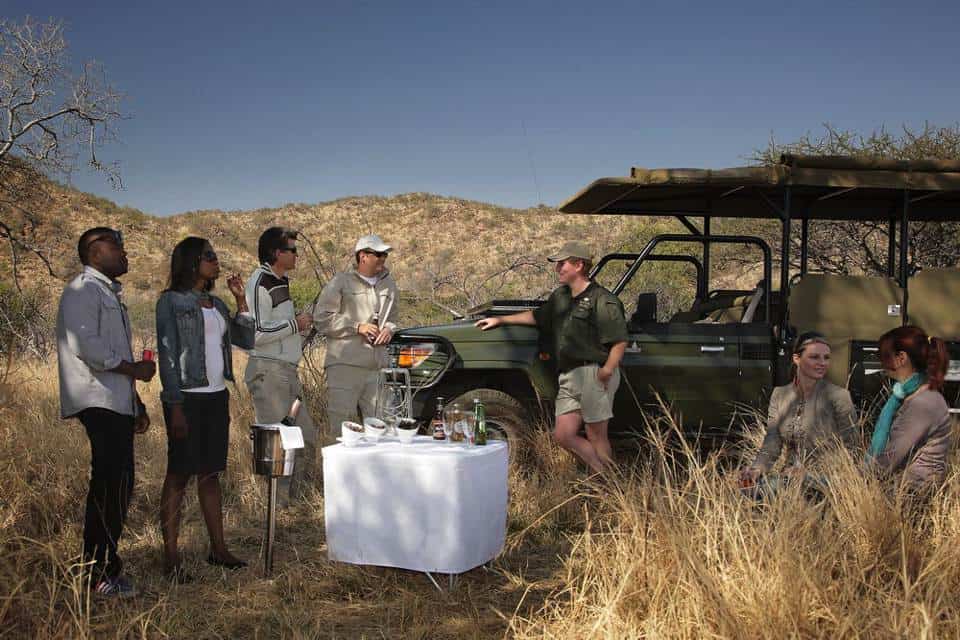
Packing for Pilanesberg is straightforward, but preparation improves comfort during game drives.
Recommended items include:
- Neutral-coloured, comfortable clothing
- A warm jacket for early morning drives
- A sunhat and sunglasses
- Sunscreen
- Comfortable closed shoes
- Binoculars
- A camera or smartphone
- Drinking water
- Personal medication
- A power bank
- Rain protection during summer
Winter visitors should prepare for cold mornings, even when daytime temperatures are pleasant.
Summer visitors should expect warmer conditions and the possibility of afternoon rain.
Bright colours are not prohibited on ordinary vehicle safaris, but neutral clothing is practical and less visually distracting.

Practical Tips for First-Time Visitors
A successful Pilanesberg safari depends on realistic expectations and good planning.
Start early. Cooler morning conditions can provide good opportunities to observe active wildlife.
Allow enough time. Wildlife moves naturally through the reserve, so sightings may require patience.
Do not focus only on the Big Five. Birds, antelope, smaller mammals and animal behaviour are equally valuable parts of the experience.
Choose the right safari format. Guided game drives are particularly helpful for visitors who want wildlife interpretation.
Check gate information. Confirm current operating hours, entrance fees and access arrangements before travelling.
Respect wildlife. Never approach animals on foot or attempt to influence their behaviour.
Consider staying overnight. Multiple game drives increase your opportunities to experience different habitats and wildlife activity, although they cannot guarantee sightings.
Plan Your Pilanesberg National Park Safari
Pilanesberg National Park combines accessible Big Five wildlife viewing with an unusual geological landscape, rich conservation history and a wide choice of safari experiences.
Its location near Johannesburg makes it possible to enjoy a guided day safari, while overnight stays provide more time to explore different parts of the reserve.
Whether you prefer an independent self-drive, an organised game drive or a safari lodge experience, careful planning will help you make the most of your visit.
Explore the available Pilanesberg safari tours and choose an experience that suits your travel dates, budget and preferred itinerary.
Frequently Asked Questions
Where is Pilanesberg National Park located?
Pilanesberg National Park is located in South Africa’s North West Province, near Sun City and Rustenburg. It is approximately three hours by road from Johannesburg, depending on the route and departure point.
Is Pilanesberg National Park malaria-free?
Yes. Pilanesberg is situated outside South Africa’s recognised malaria-risk areas and is regarded as a malaria-free safari destination. Standard insect-bite precautions are still advisable.
Can you see the Big Five in Pilanesberg?
Yes. Pilanesberg is home to elephants, lions, leopards, rhinoceroses and African buffalo. However, wildlife moves freely within the reserve, and sightings of individual species cannot be guaranteed.
How far is Pilanesberg from Johannesburg?
The journey is approximately 180–220 kilometres, depending on the departure point and park entrance. Driving generally takes around 2.5–3.5 hours under normal conditions.
Is Pilanesberg suitable for a day trip?
Yes. Pilanesberg is a popular day safari destination from Johannesburg and Pretoria. A full-day visit provides time for wildlife viewing, although an overnight safari allows additional game drives.
Can you drive your own car in Pilanesberg?
Yes. Self-drive safaris are permitted on designated public roads. Many established routes are suitable for ordinary passenger vehicles under normal conditions, but visitors should check current road conditions.
Do you need a 4x4 vehicle for Pilanesberg?
A 4×4 is not normally required for the main public game-viewing roads. However, visitors must remain on permitted routes and follow any temporary road restrictions.
What is the best month to visit Pilanesberg?
The dry winter months, particularly from May to September, generally offer favourable conditions for spotting larger mammals because vegetation is thinner. Summer is also rewarding, especially for birdwatching and green landscapes.
How many days should you spend in Pilanesberg?
A day trip is suitable for a short safari experience. Two or three days allow more time for morning and afternoon game drives and a more relaxed visit.
Are there lions in Pilanesberg?
Yes. Lions are part of the reserve’s predator population. Their location and activity vary, so sightings depend on timing, conditions, and chance.
Are there elephants in Pilanesberg?
Yes. African elephants live in the reserve and may be encountered in different habitats, including areas near waterholes and established game-viewing routes.
Is Pilanesberg safe for tourists?
Pilanesberg is an established safari destination with regulated visitor access. However, it is home to dangerous wild animals, and visitors must follow all safety instructions, road rules, and designated-area restrictions.
What is the difference between Pilanesberg National Park and Pilanesberg Game Reserve?
The names are commonly used interchangeably in tourism information. Both generally refer to the protected wildlife destination in the North West Province.
Is Pilanesberg better than Kruger National Park?
The two destinations offer different experiences. Pilanesberg is smaller, malaria-free, and conveniently located near Johannesburg, making it attractive for short safaris. Kruger National Park covers a much larger area and offers extensive wilderness and multi-day safari opportunities. The better choice depends on your available time, travel preferences, and safari priorities.
Can children visit Pilanesberg?
Yes. Pilanesberg is a popular family safari destination. However, individual lodges and guided safari operators may have minimum age requirements for particular activities.
Are there restaurants and picnic areas in Pilanesberg?
The park has designated visitor facilities, including rest areas and selected food services. Availability and operating arrangements should be checked before travelling.
What time do the Pilanesberg gates open?
Gate opening times vary seasonally. Check the latest Pilanesberg gate times before your visit.
Can you stay overnight inside Pilanesberg?
Yes. Accommodation is available in and around the reserve, including safari lodges and other establishments. Some properties offer packages with guided game drives and meals.
Is Pilanesberg worth visiting?
Pilanesberg is a worthwhile destination for travellers seeking a Big Five wildlife experience close to Johannesburg. Its malaria-free setting, varied habitats and range of safari options make it particularly practical for first-time visitors, families and shorter holidays.